Saturday, July 25, 2015

Mexican Cut Preserve

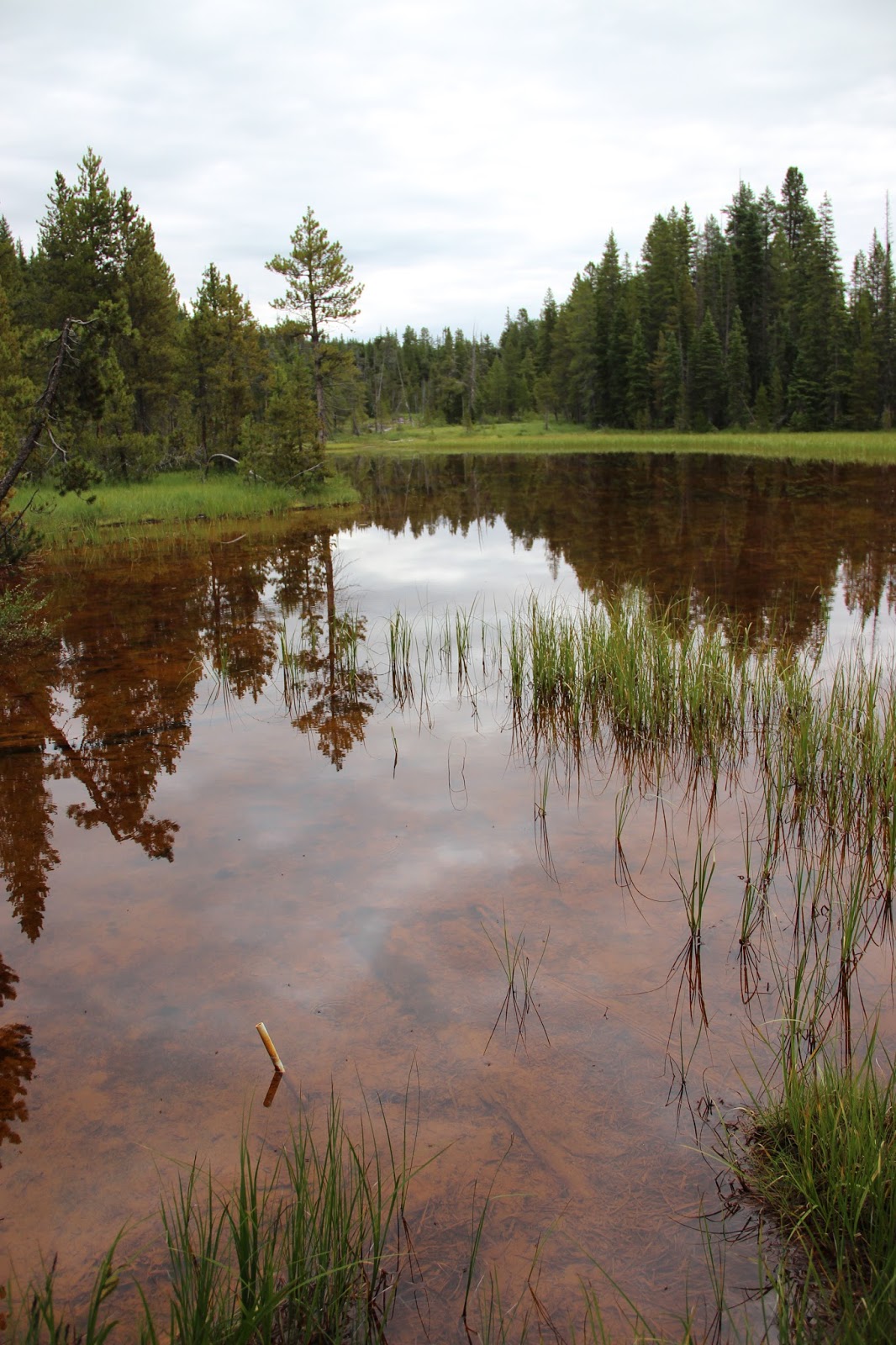
Today we returned to the Rocky Mountain Biological Laboratory to meet the Science Director, Jennifer Reithel. Jenny escorted us to Mexican Cut Preserve, which is not open to the public. The Nature Conservancy owns this 960-acre preserve, but the land is managed by RMBL. We hiked up to the cirque, a flat area created by glacial erosion, which contains 20-30 ponds at around 11,000 ft. The ponds have never contained any fish, but do have populations of eastern tiger salamanders. It's very unusual for salamanders to be found at high elevations. Also unusual is that some of the salamanders remain in a larval form, but are still able to reproduce. We passed through a moist meadow and woodland before reaching the pools, so were able to see a diversity of plants. We also learned from Jenny that Erythronium grandiflorum seed pods are edible! They have a slightly sweet taste. Hopefully we don't run out of snacks or our collected pods might be next!

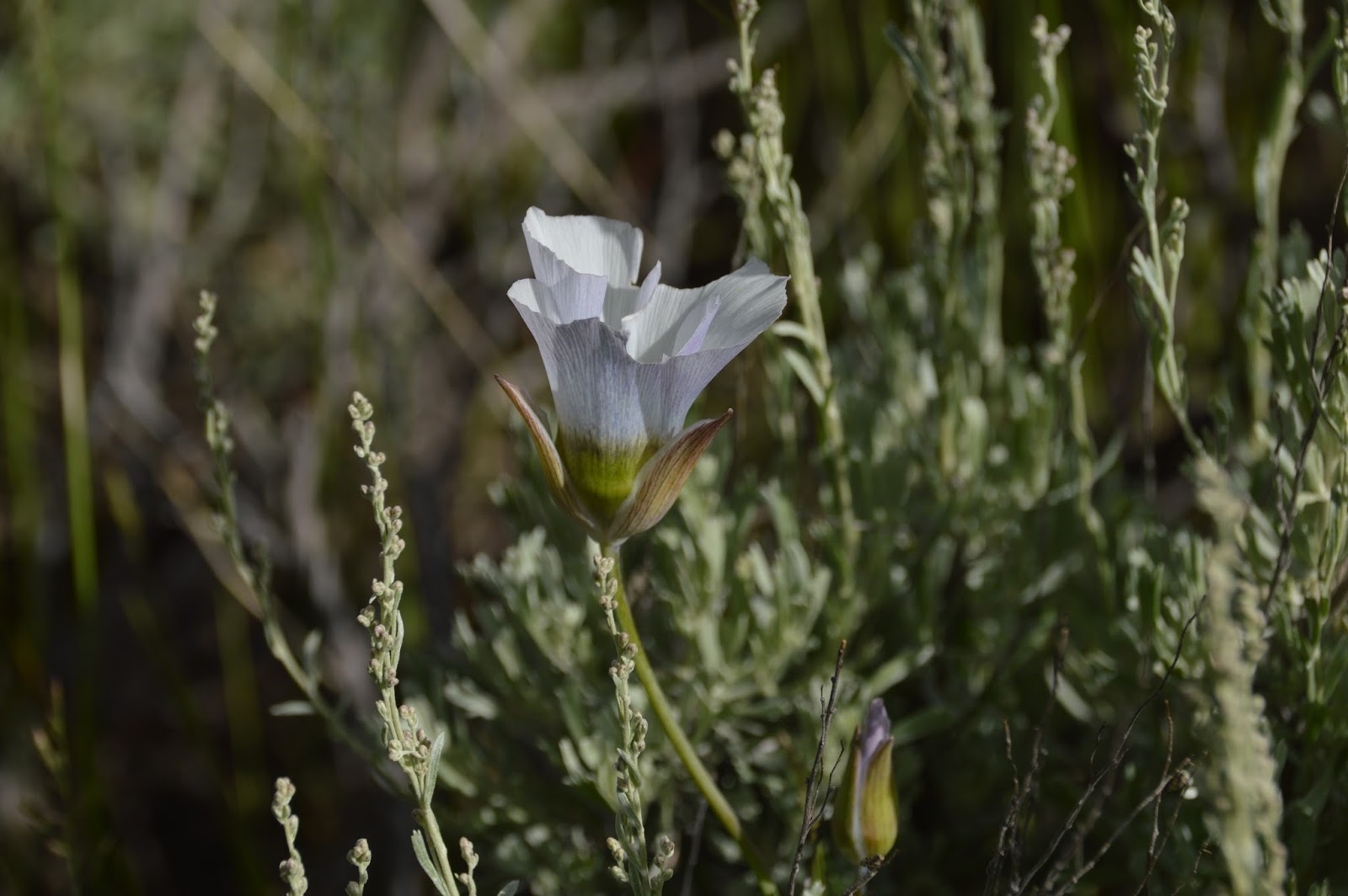
In the afternoon, we left Crested Butte to travel southwest to Montrose. We detoured along Jack's Cabin Cutoff and stopped in sagebrush steppe where Calochortus gunnisonii was dotting the landscape with its delicate white flowers. We also discovered mountain ball cactus, Pediocactus simpsonii and yellow owl's-clover, Orthocarpus luteus, which is a hemiparasitic plant.


A chilly stream crossing at the beginning of our hike. This clearing was the former site of a mining town.


Mimulus guttatus, seep monkeyflower, grew by the edge of the stream.
 
 
This Helianthus species has extrafloral nectaries which attract ants. The ants provide some protection to the plant by keeping seed predators off the flower.
 
 
View of a pool at Mexican Cut.


Eastern tiger salamander
 

A very nice rose-colored Castilleja.


Looking out across Mexican Cut, with debris and railroad tracks from an old mine in the foreground.
 
 
Mike Bone wins the Mexican Cut strongman competition.
 

Marmot at RMBL
 

Pediocactus simpsonii


Friday, July 24, 2015

Iron Fen/Rocky Mountain Biological Laboratory

Iron fen - it sounds like the name of a band. It's actually a very unique wetland found in eight areas in Colorado, but nowhere else in the world. We visited an iron fen outside of Crested Butte. The soil is very rich in iron, giving the slow-moving water a reddish hue. This is the one of three locations in Colorado of the roundleaf sundew, Drosera rotundifolia. Denver Botanic Gardens visited the fen a few years ago to study the population and collect seeds. Mike Bone came up with a propagation protocol and was able to successfully grow these plants from seed.
 
In the afternoon, we visited Rocky Mountain Biological Laboratory north of Crested Butte. Ian Billick, the Executive Director, gave us a tour of the research facilities and herbarium. RMBL was founded in 1928, covers 1500 acres and serves as a platform for a wide array of field research. It is a particular hotspot for pollination biology research since the natural diversity of pollinators has not been impacted by the introduced honeybee. Other interesting research projects include introduced plants and their impact on butterflies, and the ability of alpine plants to compete with lower-elevation plants. The latter scenario could occur as climate change causes plants to move up in elevation with rising temperatures. Denver Botanic Gardens also helped RMBL propagate some locally-collected plants to use in research projects.


Iron Fen

 
Iron Fen
 
 
Drosera rotundifolia

 
Drosera rotundifolia closeup
 
 
Eriophorum altaicum var. neogaeum, whitebristle cottongrass, is a rare plant in Colorado. The species is also found in the Altai Mountains.
 
 
A clearing near the fen provided scenic views.
 

Dr. Rick Williams, a pollination biologist, has been in charge of the herbarium at RMBL for the past 7 years.
 

A hoophouse provides growing space for an Ipomopsis research project.
 

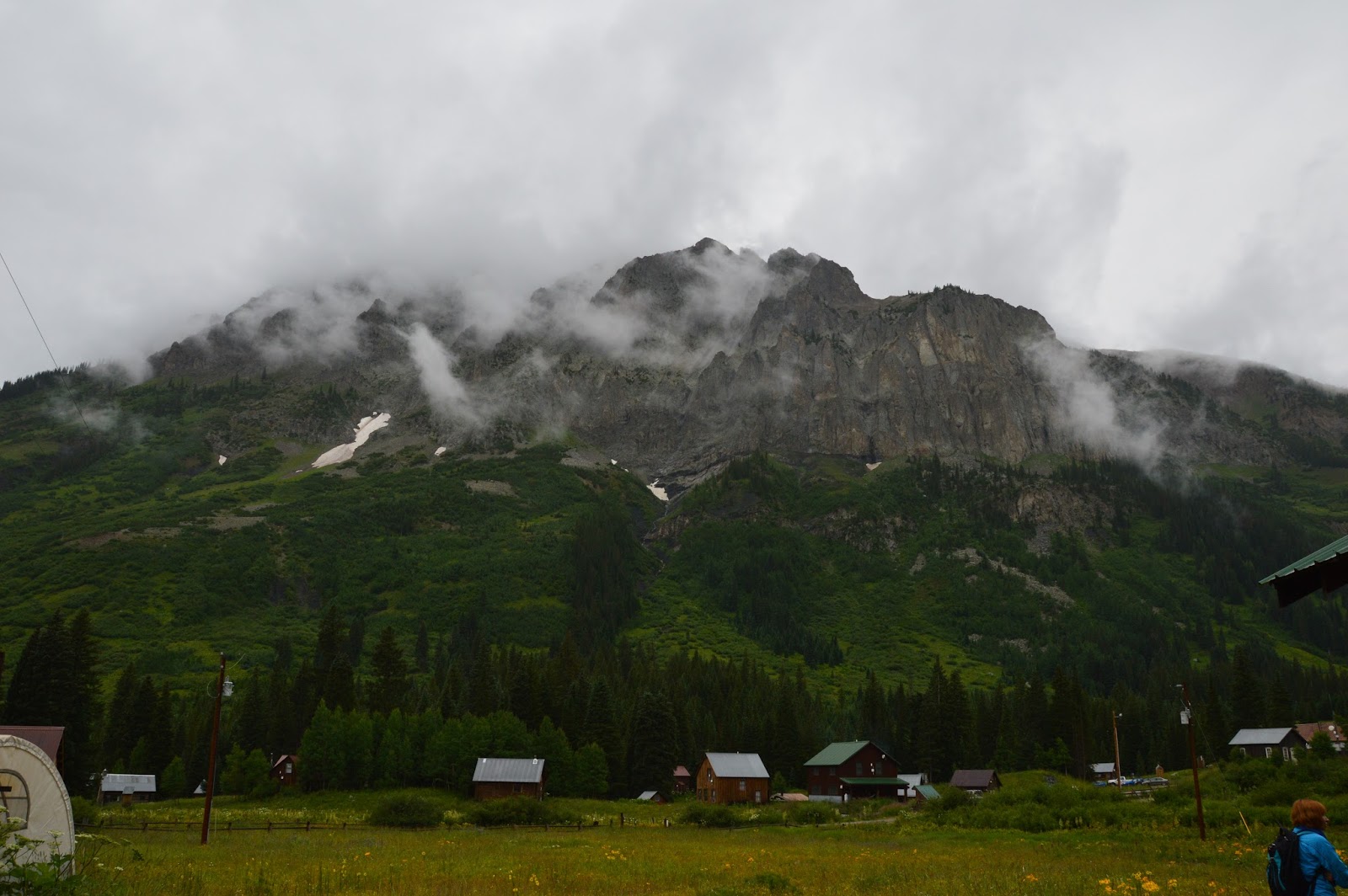
The backdrop for RMBL, which was built on the site of the abandoned mining town Gothic.

DBG Gunnison Rare Plant Monitoring

On Thursday we visited Denver Botanic Garden's rare plant monitoring site near Gunnison. Michelle DePrenger-Levin gave us a tour of two sites where they monitor plants. At the first site, Astragalus anisus, a Colorado endemic had set seed a few weeks prior. Michelle and her group flagged the plants with seedpods and collected the seeds. Most of the seed will go to the USDA seed bank in Ft. Collins, CO, the rest will be grown and added to DBG's living collection. Mike and I also collected a few seeds from nearby plants of Physaria rollinsii.

Astragalus microcymbus has much longer, spindly stems. It is a very hardy plant with a long taproot that can be browsed back to the ground and still resprout. They grow on all aspects except for north-facing slopes. Since 1995, the Garden has monitored populations of Astragalus microcymbus. Michelle mentioned that the original population count was in a boom year, where favorable conditions led to a high population of plants. Recent counts may show a decline, but this is likely just the natural ebb and flow of the population as conditions change.  

We headed out from the monitoring sites and stopped for lunch at the Swampy Pass Trailhead, which had a spectacular wildflower display. On the way back to Crested Butte, we drove through the Ohio Pass and Kebler Pass and stopped at Lake Irwin, a subalpine lake. In between Ohio and Kebler Pass we stopped at a wet meadow along the road and collected seedpods of Erythronium grandiflorum.


Collecting seeds from Astragalus anisus.

Astragalus anisus


Astragalus microcymbus
 
We also encountered a flowering Opuntia phaecantha at the Gunnison site.

Frasera speciosa at Swampy Pass Trailhead.

Closeup of Frasera speciosa flower.

A scree slope near Ohio Pass had Penstemon caespitosus.

View from the side of the road near Ohio Pass with Senecio atratus.

Inna near spectacular specimens of Corydalis caseana subsp. brandegei. These plants average between 5-6 feet tall! Mike was skipping down the road when we found these!


Corydalis caseana subsp. brandegei

Lake Irwin


Thursday, July 23, 2015

Betty Ford Alpine Garden and Cottonwood Pass

Wednesday was a day full of amazing plants! We set out in the morning from Denver and picked up Mike Bone on the way to Vail. We met with Nick Courtens, Senior Horticulturist and Nicola Ripley, Director of the Betty Ford Alpine Garden for a tour of their 4.5 acre garden. We also got a sneak peek of their new education center and alpine house, which will open next Wednesday.

From Vail, we drove to Crested Butte through Leadville and Cottonwood Pass. We made several stops for roadside botanizing!


Nick points out some interesting plants.


The crevice bed at Betty Ford Alpine Garden. Nick would like to renovate the garden to add more rocks and reduce some of the overgrown plants.

The new alpine house


Roadside botanizing

 
Near Leadville, we found Calochortus gunnisonii in a high-altitude sagebrush steppe. This is one of only two species in Colorado.

Calochortus gunnisonii

Cottonwood Pass was our last stop of the day. We stayed until after the sun set. The Dryas octopetala glowed in the twilight!


View from Cottonwood Pass
 

Dave climbed the nearby peak.


Meanwhile, Mike, Inna, Vladimir and I explored lower down the slope. The snowmelt area below this persistent snowfield had several interesting species, including Rhodiola rosea, Rhodiola rhodantha and Aster alpinus.

The coolest plant at Cottonwood Pass was Eritrichum nanum, the arctic alpine forget-me-not.

 
A natural crevice garden!


Tuesday, July 21, 2015

Pawnee Buttes

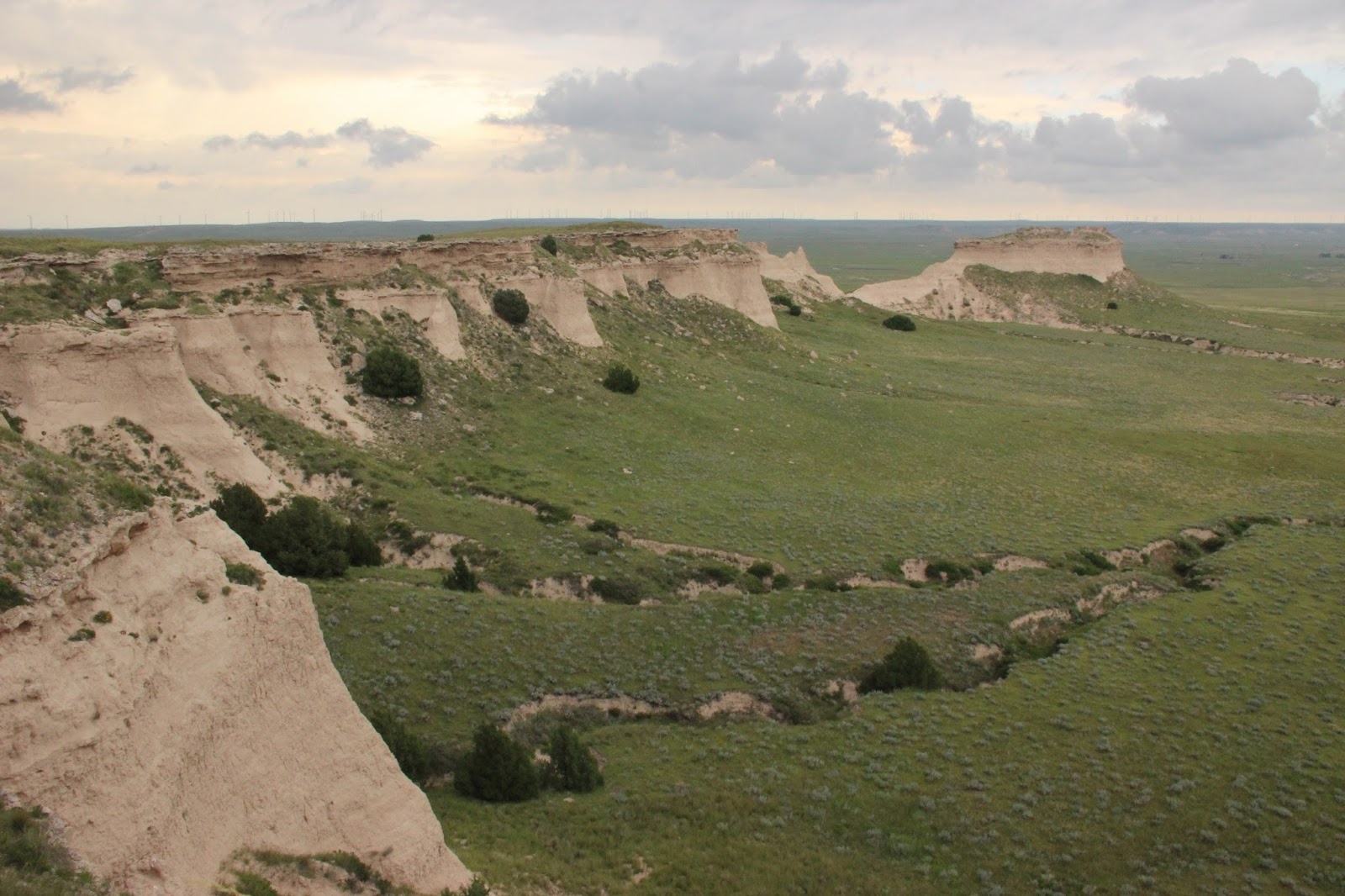
We set out this morning with Dan Johnson and Katy Wieczorek to explore the Pawnee Buttes area in the Pawnee National Grassland. The Buttes rise above short grass prairie and are part of the Central North American Steppe region. The area is very remote, but has become more developed in recent years due to oil and gas extraction.

Artemisia frigida, prairie sagewort, adds a lovely blue-gray color to the landscape.

Ouch! Argemone polyanthemos, prickly poppy, grows along the road.


Pawnee Buttes


A remnant population of limber pine, Pinus flexilis, grows on sheltered north-facing slopes.
 
Junipers grow in gullies in the flats.
 
Cushion plant forms show up on the top of the bluffs.
 
 Stemless four-nerve daisy, Tetraneuris acaulis

Dan, Inna, Katy, Mariel and Vladimir at the end of the day.